 Mochi Style
How the three judges score your look in Mochi Style
Miso checks colours, Pudding checks the theme and Bean checks the details. Here is what each one counts and how to please all three.
In this guide
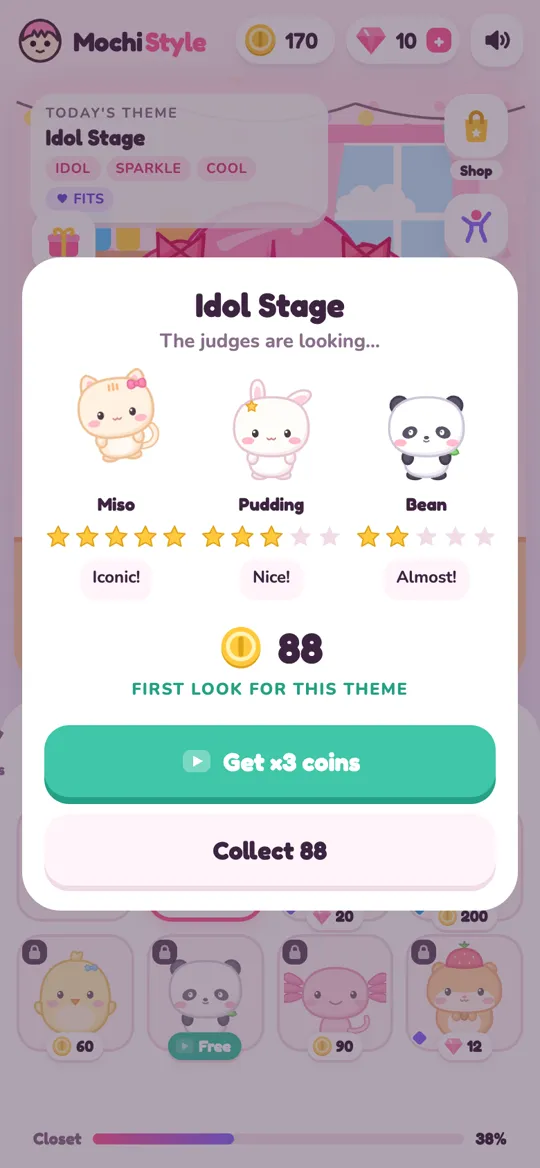
When you tap Judge in Mochi Style, three cute judges each give your look one to five stars, so the best score is 15. Miso the cat scores how close your colours are to the theme's palette, Pudding the bunny counts the items with a heart that fit today's theme, and Bean the panda counts details like a hat, glasses, wings, a pet, the theme's scene and a pose. The same stars decide your scores in a runway battle.
You picked a cute outfit, tapped Judge, and one judge gave you five stars while another gave you two. That is not bad luck. The Mochi Style judges each look at a different part of the look, and none of them is random.
This guide explains exactly what Miso, Pudding and Bean count, why a look can score high with one judge and low with another, and a step-by-step routine for filling every row of stars. It also covers how stars turn into the score cards you see on the runway.
Meet the three judges
The three judges are always the same, and each one has one job.
- Miso the cat looks at colours. Does the outfit use the colours of today's theme?
- Pudding the bunny looks at the theme. How many of the things you are wearing fit the theme?
- Bean the panda looks at details. How finished is the look: accessories, a pet, the right scene, a pose?
Each judge gives one to five stars and says a little line in a speech bubble. Five stars gets words like "Iconic!" or "Perfect!", while one star sounds more like "Needs sparkle" or "Try again?". Their lines are a quick hint about which part of the look needs work.
How Miso scores colours
Miso compares the colours on your doll with the five colours of the theme's palette. These are the colours Miso checks:
- the dress, or the top and bottom if you are not wearing a dress
- the shoes
- the hair
- the headwear, if your doll wears a hat or other head piece
Each colour earns more when it sits close to one of the palette colours. Every theme has its own palette. Mermaid Lagoon leans on sea green, soft pink, sky blue, white and purple, while Candy Party uses pink, yellow, sky blue, white and rose pink.
Hair is the colour beginners forget most. It is the biggest shape on a chibi doll, so a bright green ponytail on a pastel candy look can cost Miso stars even when the dress is perfect. Recolour the hair with the colour row first, and keep your other colours close to the theme.
How Pudding scores the theme
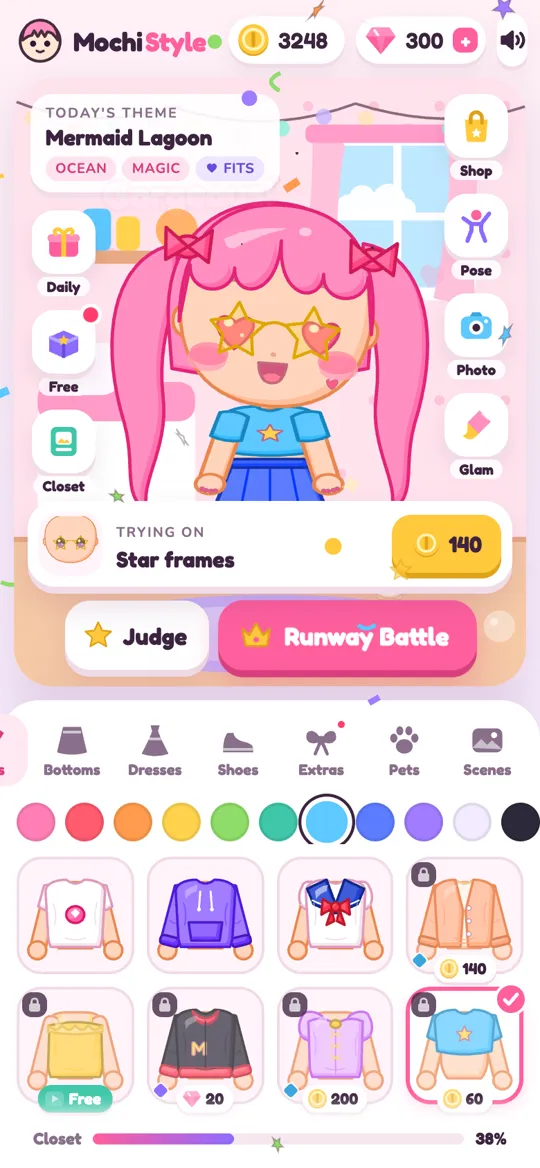
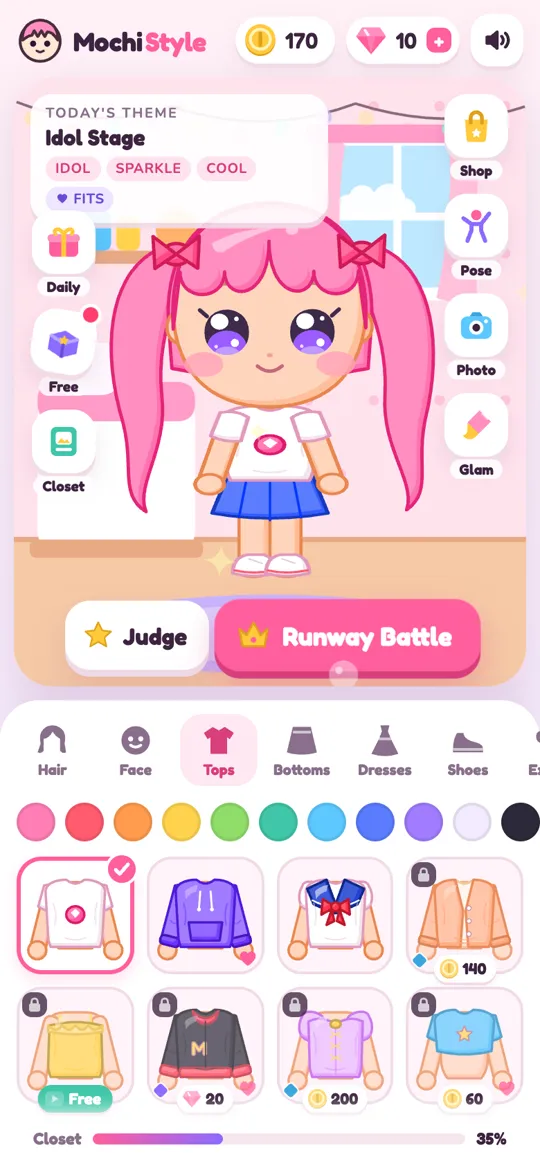
Pudding is the easiest judge to read, because the game shows you what she likes. In the closet, any item that fits today's theme has a small heart on its card. The theme card at the top of the room shows the style tags for the day, for example idol, sparkle and cool for Idol Stage.
Pudding starts at one star and adds a star for every heart item you wear. Four heart items fill her row.
More things count than most players think:
- clothes: the dress, top, bottom and shoes
- extras: headwear, glasses, wings and the pet
- the scene behind your doll
- face choices: eyes, mouth and blush
Face choices are the hidden trick. Star eyes and Star blush fit magic and night themes. Sparkle eyes fit cute and princess themes. Hearts blush fits cute and candy themes, and the Cat mouth fits cute themes. They cost nothing to try, so check the Face tab for hearts before you buy another dress.
How Bean scores details
Bean wants a finished look. Each of these counts as one detail:
- headwear
- glasses
- wings
- a pet
- the scene that belongs to the theme
A pose other than plain standing counts as half a detail. You set it with the Pose button on the right of the room.
Three details plus a pose fills Bean's row, and so do four details. One detail alone gets only a couple of stars, which is why the judging screen above shows Bean saying "Almost!".
The theme scene matters twice. Stage goes with Idol Stage and Princess Ball, Mermaid lagoon with Mermaid Lagoon, Unicorn sky with Unicorn Dream, Candy Land with Candy Party, Beach with Beach Day, and Bedroom with Kawaii Cat Cafe, School Day and Pyjama Party. Picking it gives Bean a detail and often gives Pudding a heart item too.
A routine for a full row of stars
Use this order every time. It works for any theme.
- Read the theme card. Note the tags and remember that items with a heart fit them.
- Pick the scene. Choose the scene that belongs to the theme.
- Pick a main piece with a heart. A dress, or a top and bottom, then recolour it into the theme's colours.
- Recolour the hair. Choose a palette colour that frames the outfit.
- Add two or three heart extras. Headwear, glasses, wings or a pet. Each one helps Pudding and Bean at the same time.
- Check the Face tab. Swap in eyes, blush or a mouth with a heart.
- Choose a pose. Anything except plain standing.
- Watch her face, then tap Judge. She makes wow eyes at sparkly pieces and pouts at the wrong outfit.
If you are wearing items you have not unlocked yet, the game shows a "Still trying on" sheet first. You can unlock them or take them off before the judges look.
What happens after the stars
After the stars land you see your coin total. More stars and more heart items mean more coins. You can collect them, or choose to watch a short video for three times the coins. The video is always optional.
A few small extras show up too:
- Judges who give four or five stars do a little dance.
- A very high total sets off an "AMAZING!" celebration, and a near-perfect total a "PERFECT!" one.
- The screen tells you when it is your first look for a theme or a new best for that theme.
When you collect, the next theme comes up, so every judging round is a fresh challenge.
How stars become runway battle scores
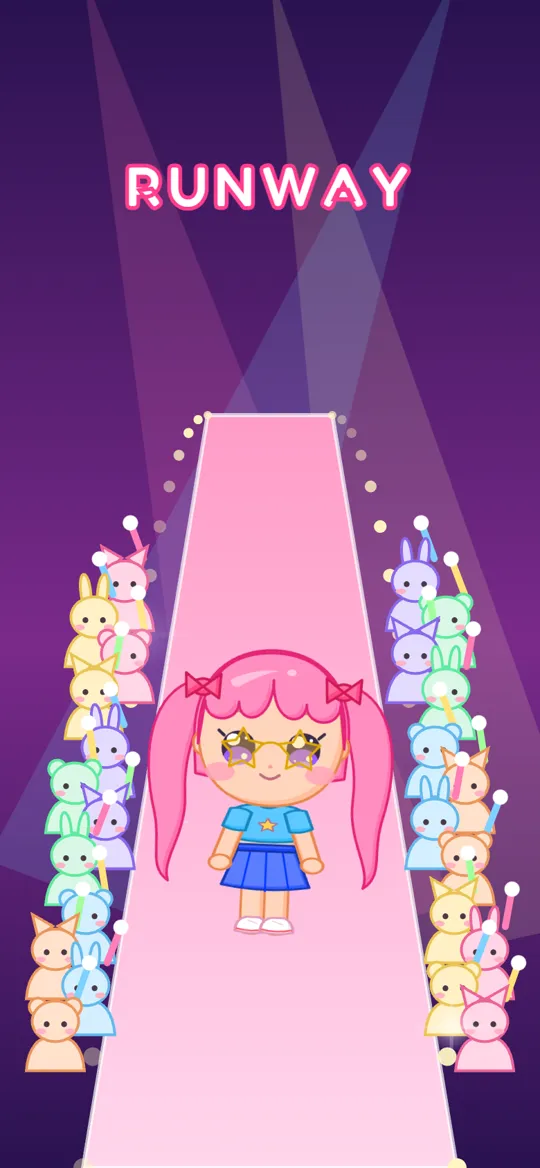
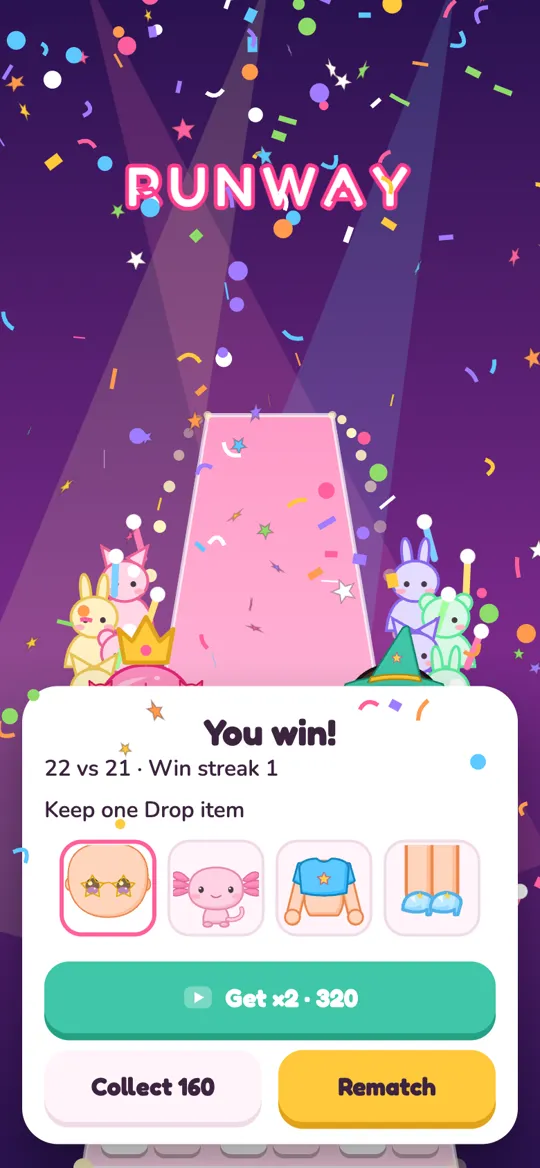
The runway battle uses the same three judges. After the catwalk, each judge holds up a score card for you and for your rival, from 3 to 10. Those cards come from the stars your look would earn, with a small dash of luck, so a strong judging look is also a strong battle look.
There is one battle bonus. If your doll wears at least two items from the Dress Drop parcels, each of your cards gets a little extra. That is why picking parcels that fit the theme pays off. Our runway battle guide explains the parcels and the 60-second clock step by step.
Practise with real looks
The fastest way to learn the judges is to try a theme with clear colours. Our Mermaid Lagoon outfit ideas list the heart items for that theme, and the Idol Stage outfit ideas show how to build a bold pink, black and yellow look. Try one, tap Judge, and see which judge you still need to win over.
FAQ
What is the highest score from the judges in Mochi Style?
Each of the three judges gives up to five stars, so the highest score is 15 stars. You need theme colours for Miso, about four heart items for Pudding, and enough details for Bean.
Why did Miso give me only one or two stars?
Miso checks the colours of your main outfit, shoes, hair and headwear against the theme's palette. If one of them, often the hair, is far from those colours, Miso's stars drop. Recolour it with the colour row.
What does the heart on an item mean?
The heart means the item fits today's theme. Pudding the bunny adds a star for every heart item your doll wears, and four of them fill her row.
Do face choices count for the judges?
Yes. Eyes, mouth and blush can carry theme tags, so items like Star eyes or Hearts blush can show a heart and count for Pudding. Hair style does not count for Pudding, but its colour counts for Miso.
Does the scene change my score?
It can. The scene that belongs to the theme counts as a detail for Bean, and if it shows a heart it also counts as a theme item for Pudding.
Are the judges the same in a runway battle?
Yes. Miso, Pudding and Bean judge the runway too. Your stars turn into score cards from 3 to 10, and wearing two or more Dress Drop items adds a small bonus.