 Mochi Style
Chibi art style explained: what makes a character chibi?
Big head, tiny body, sparkly eyes. Here is how the cutest drawing style works, and how to draw a chibi doll of your own in six easy steps.
In this guide
The chibi art style draws characters with a huge head, a short, rounded body and big, shiny eyes. A chibi figure is usually only two to four heads tall, while a realistic person is about seven or eight. Faces are simple, features sit low and close together, and hands and feet become little rounded shapes. The result looks small, soft and cute, which is why chibi is a favourite for stickers, mascots and dress up games.
You have probably seen chibi characters on stickers, pencil cases, phone games and fan art. But what turns an ordinary drawing into a chibi one? It is not just "make it small". There are a few clear rules, and once you know them you can spot them, and draw them, anywhere.
This guide explains the shapes and proportions behind the style, how chibi faces are built, and how to draw your own little character step by step. We use our own game doll from Mochi Style as a real example along the way.
What does chibi mean?
Chibi is a Japanese word that means small or short. In art, people use it for characters drawn in a tiny, cute, rounded way. You may also see the term super deformed, or SD. It means almost the same thing: a character whose proportions are pushed far away from real life on purpose.
Chibi sits inside the bigger world of kawaii, the Japanese love of all things cute. Kawaii is a whole mood that covers fashion, colours and objects, while chibi is one specific way of drawing people and creatures. If you want the wider picture, our simple guide to kawaii fashion explains how the two fit together.
Chibi proportions: the head is the star
Artists often measure bodies in "heads". You take the height of the head and count how many of them stack up to the full height of the figure. A realistic adult is roughly seven or eight heads tall. A chibi character is usually just two to four.
- 2 heads tall. The head is about half the whole figure. This is the cutest, most toy-like version.
- 3 heads tall. Still very cute, with a little more room for clothes and poses.
- 4 heads tall. Closer to a small child. It reads as cute but a bit more grown-up.
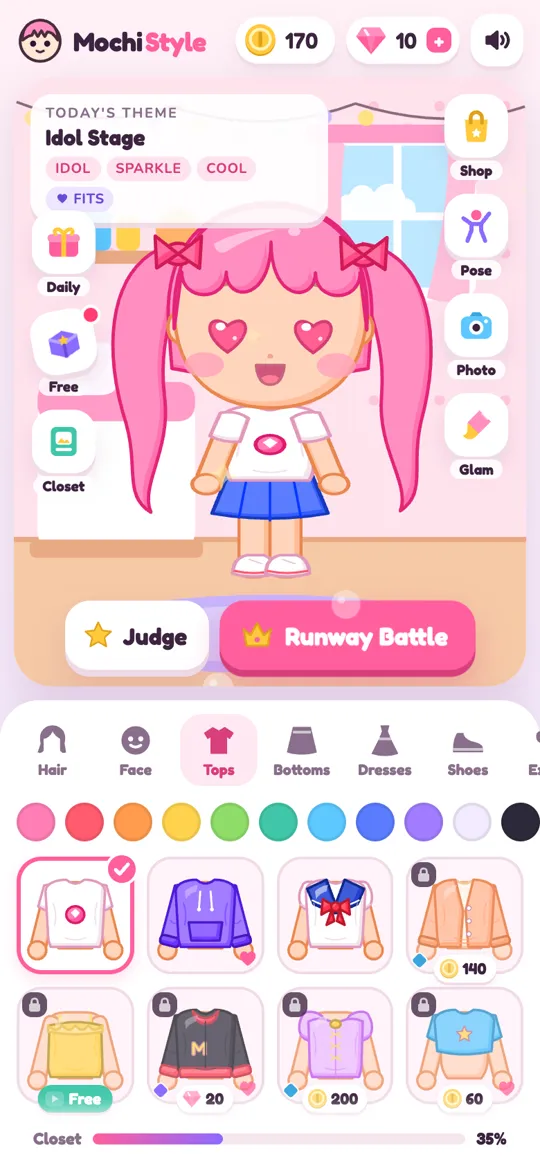
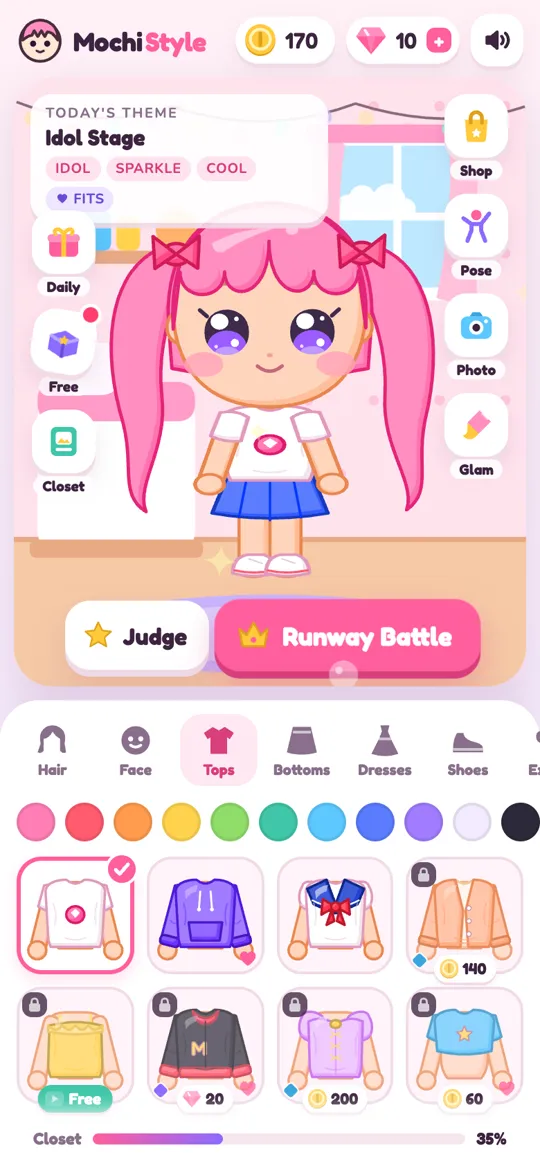
The fewer heads you use, the more "chibi" the character feels. The Mochi Style doll sits at the cute end of that range: in the game's own drawing code, everything below her neck is squashed shorter and chubbier, so her head is about half of her height.
The body also gets simpler as it gets smaller. Arms and legs become short, soft tubes. Hands turn into little mitten shapes, and feet are tiny rounded nubs. There are no knees, elbows or muscles to draw. The detail moves up to the head and to the clothes instead.
How chibi faces are built
The face does most of the work in the chibi style. A few small choices make a big difference.
- Eyes are huge. They can take up a large part of the face, and most artists add one or two white highlight dots so they look shiny. Mochi Style's sparkle eyes have several white glints inside each eye for exactly this reason.
- Features sit low. The eyes sit around the middle of the head or lower, with a big forehead above. Moving the face down makes any character look younger and cuter.
- Features sit close. Eyes, nose and mouth are bunched together. The nose is often a tiny dot or left out.
- Mouths are tiny. A small curve, a little "o" or a cat-like "w" shape is enough.
- Blush is a shape. Round pink patches, or even little hearts or stars, sit under the eyes.
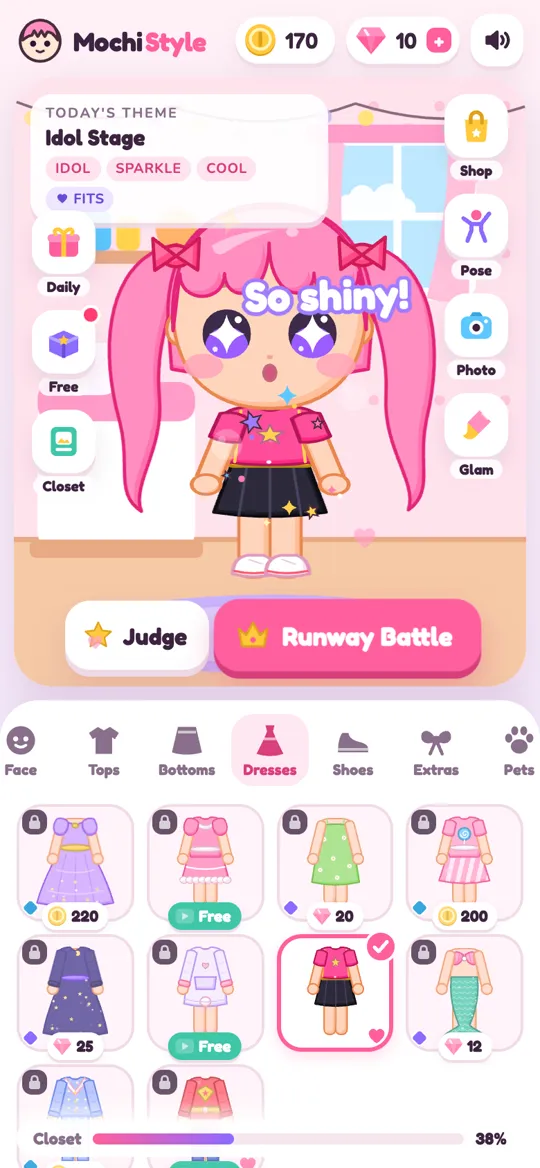
Because the shapes are so simple, chibi faces are great at showing feelings. Swap the eyes and you swap the mood. In Mochi Style the Face tab has six eye styles, Sparkle, Button, Star, Sleepy, Cat and Happy eyes, and the doll's own reactions switch to wow eyes, heart eyes or a pout when she sees something she likes or dislikes.
Line colour matters too. Many cute artists swap black outlines for a soft colour. The Mochi Style doll is outlined in a gentle plum instead of black, which keeps her looking soft against pastel colours.
How to draw a chibi character in six steps
You only need a pencil, an eraser and some paper. Draw lightly at first.
- Draw a big circle for the head. Make it a bit wider than it is tall. This is your measuring stick.
- Add a small body below. For a two-head chibi, draw a soft bean or pear shape about as tall as the head. Keep the shoulders narrow.
- Add short arms and legs. Use little rounded tubes. Finish the hands as mittens and the feet as small ovals. Do not draw fingers or knees.
- Draw a cross on the face. Put the horizontal line around the middle of the head or a little lower. Place two large eyes on it, wide apart enough to leave a small gap between them.
- Fill in the face. Add highlight dots in the eyes, a tiny mouth below and between them, and round blush patches on the cheeks. Skip the nose or make it a dot.
- Add big hair and one cute extra. Draw the hair as a few large shapes that sit over the head, like bangs and twin tails. Then add a bow, a hat or star glasses, and ink your final lines.
Hair, clothes and accessories on a chibi
With such a small body, the biggest shapes on screen are the head and the hair. That changes how you style a chibi character.
- Hair is the silhouette. Long twin tails, a puffy bun or a big bob change the whole outline. A new hair colour can change the look more than a new top.
- Clothes stay simple. Tiny bodies do not have room for lots of seams or folds. One bold colour, a collar or a star print reads better than busy patterns.
- Accessories go big. Bows, hats, wings and glasses are drawn larger than real life so they show up clearly.
You can see all three in the Mochi Style doll: her pink twin tails are the largest shape on screen, the tops are single colours with one cute detail, and the star glasses sit right across her face.
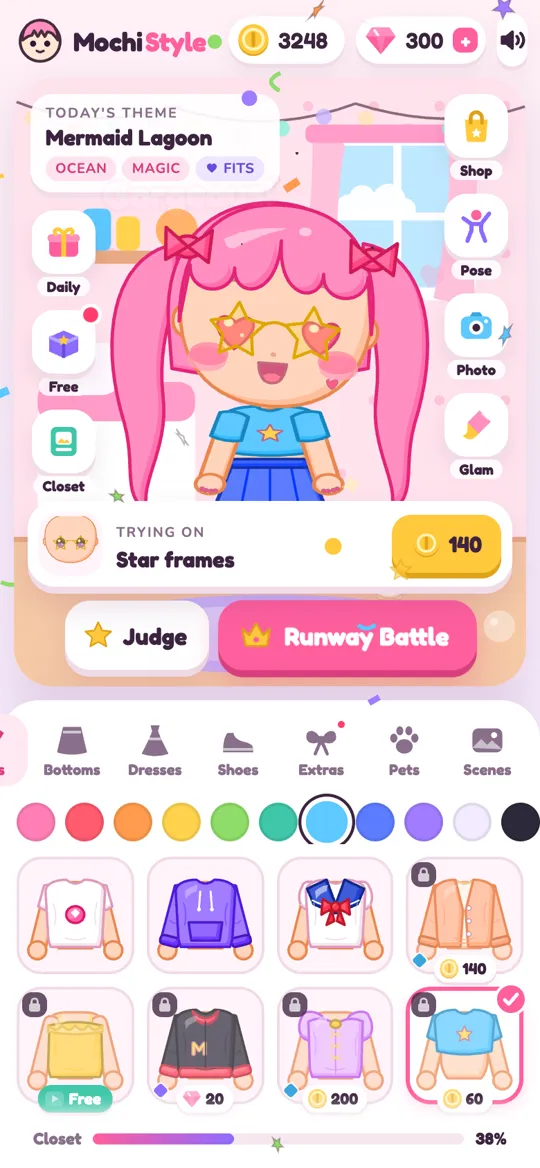
If you are deciding between a cute chibi game and a life-like fashion game, our comparison of chibi vs realistic dress up games explains how the two feel to play.
Practise the chibi look without drawing
A chibi dress up game lets you play with the same ideas by tapping instead of drawing.
- Start with the face. Try each eye style and notice how the mood changes.
- Change the hair before the clothes. See how much a new hairstyle or colour shifts the whole outline.
- Add one big accessory. A hat, a pair of glasses or wings, then decide if it is too much.
- Copy it on paper. Use the six steps above to sketch your favourite look.
Mochi Style is a free kawaii doll dress up game for Android with hair, eyes, faces, tops, skirts, dresses, shoes, hats, glasses and wings to mix. It is coming soon to Google Play.
FAQ
What is the chibi art style?
Chibi is a cute way of drawing characters with a very large head, a short rounded body and big shiny eyes. The word comes from Japanese and means small or short. It is also called super deformed or SD.
How many heads tall is a chibi?
Most chibi characters are two to four heads tall. A two-head chibi, where the head is about half the height, looks the cutest and most toy-like. A four-head chibi looks more like a small child.
What is the difference between chibi and kawaii?
Kawaii is the wider love of cute things, from fashion and colours to objects. Chibi is one specific drawing style inside kawaii, focused on tiny, rounded characters with big heads.
Why do chibi eyes have white dots in them?
The white dots are highlights. They make the eyes look shiny and alive, which adds a lot of cuteness to a simple face. Many artists add one big dot and one small one.
Is the Mochi Style doll a chibi?
Yes. Her head is about half of her height, her body is drawn shorter and chubbier, and she has big sparkly eyes. She blinks, giggles when tapped and makes wow eyes at sparkly things.