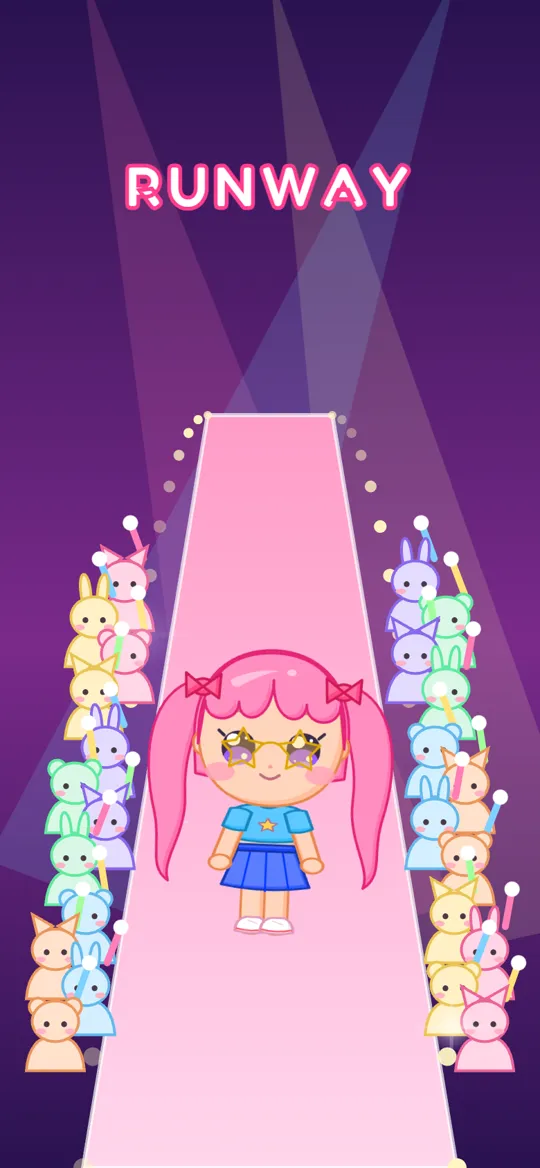
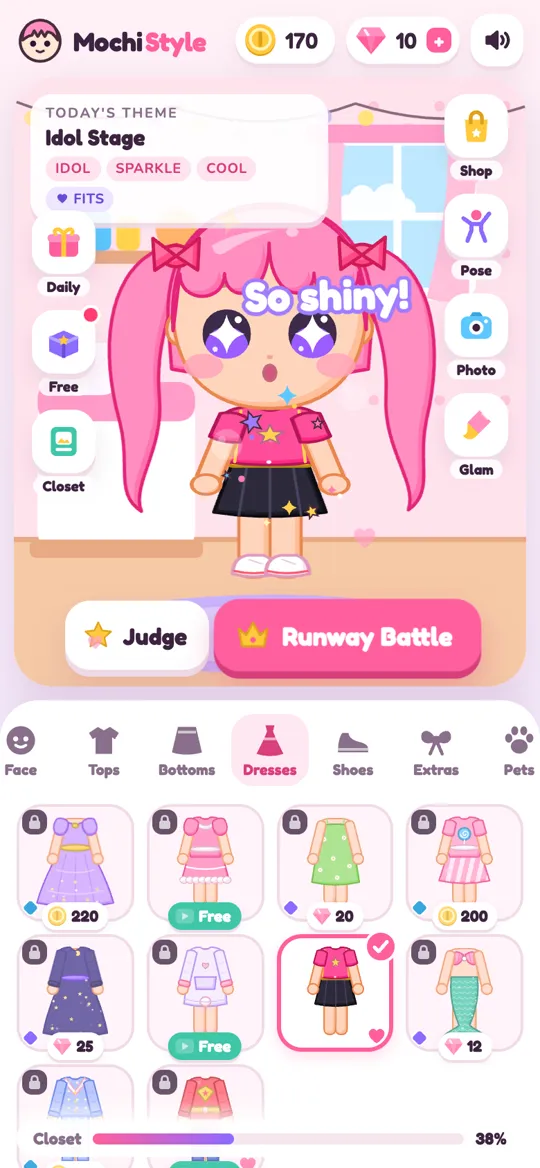
 Mochi Style
What is kawaii fashion? A simple guide
Kawaii means cute in Japanese. Here is what makes an outfit kawaii, the four building blocks behind the look, and an easy way to practise it.
In this guide
Kawaii fashion is a cute, playful style from Japan. The word kawaii simply means cute. A kawaii outfit usually mixes soft pastel or candy colours, rounded and puffy shapes, sweet motifs like hearts, stars and bows, and one or two fun accessories such as cat ears or a big bow. It is less about rules and more about looking happy, gentle and a little bit silly.
If you have ever seen a doll with huge sparkly eyes, pink twin tails and a bow bigger than her head, you already know what kawaii looks like. It is everywhere: in stationery, plush toys, cafés, cartoons and, of course, clothes.
So what is kawaii fashion, really? It can look complicated from the outside because there are so many sub-styles and so many accessories. It is actually built on a few simple ideas. This guide explains them in plain words, shows how they fit together, and gives you an easy way to practise without buying a thing.
What does kawaii mean?
Kawaii is the Japanese word for cute. It has been part of Japanese pop culture for decades, from character goods to street fashion, and it has spread around the world through games, anime and toys.
In fashion, kawaii is less a strict uniform and more a feeling. A kawaii outfit wants you to smile. It looks soft, friendly and a little childlike in a playful way. Some people wear the full look every day, others add one cute detail to a normal outfit. Both count.
The four building blocks of a kawaii look
Almost every kawaii outfit is made from the same four ingredients. Once you can spot them, you can build your own look from scratch.
- Soft or candy colours. Baby pink, lavender, sky blue, mint, butter yellow and white are the classics. Brighter candy shades like bubblegum pink work too, as long as the look still feels sweet.
- Round, puffy shapes. Puff sleeves, tutus, bubble skirts, ruffles and chunky shoes. Kawaii avoids sharp, serious lines.
- Sweet motifs. Hearts, stars, bows, clouds, strawberries and animal faces. One motif repeated a couple of times looks neat; ten different motifs can look busy.
- One playful accessory. Cat ears, bunny ears, a big bow, star clips or tiny wings. This is the piece that says "kawaii" from across the room.
You do not need all four at full volume. A plain white top with a pastel skirt and a big bow already reads as kawaii.
Kawaii styles you might hear about
Kawaii has lots of branches. You do not need to learn them all, but the names come up often, so here is a quick map.
- Sweet pastel style: the everyday version. Soft colours, cute prints, a bow or two.
- Fairy kei: dreamy pastels with a retro, toy-like feel, often with stars, unicorns and rainbows.
- Decora: lots and lots of colourful accessories, especially hair clips, worn all at once on purpose.
- Idol style: stage-ready looks inspired by pop idols, with sparkle, short skirts and bold pink. Our Idol Stage outfit ideas go deeper on this one.
Each branch turns one of the four building blocks up high. Decora turns up accessories, fairy kei turns up the dreamy colours, and idol style turns up sparkle.
How to try kawaii style on a doll
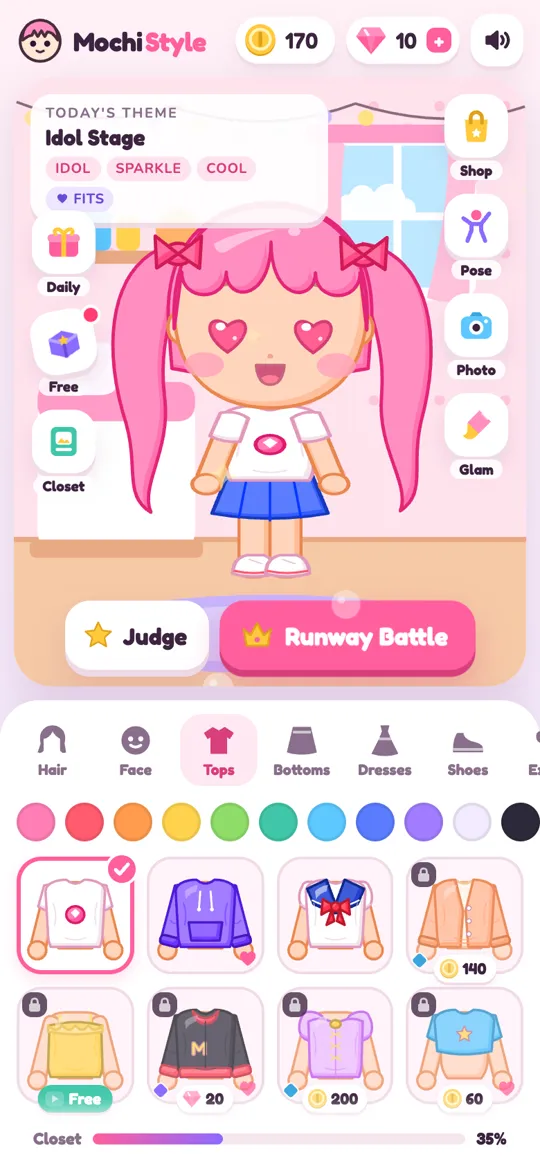
A dress up game is a low-pressure way to practise, because you can swap colours in a second and see what works. Here is a simple routine you can follow in Mochi Style, a kawaii doll dress up game, or adapt to any game or paper doll.
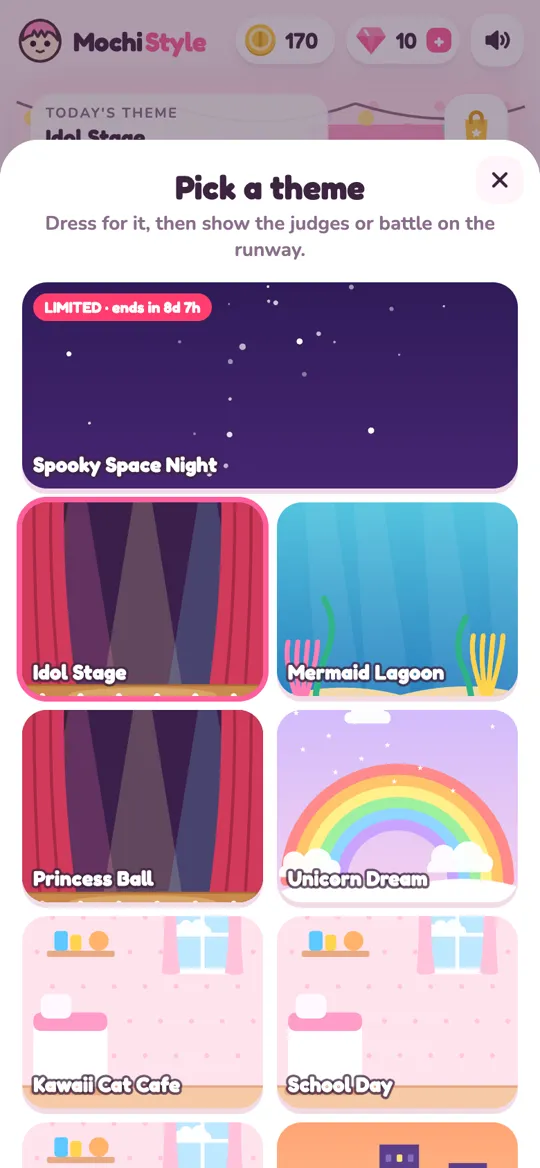
- Pick a cute theme. Open the theme picker and choose one with a soft mood, such as Unicorn Dream, Kawaii Cat Cafe or Candy Party.
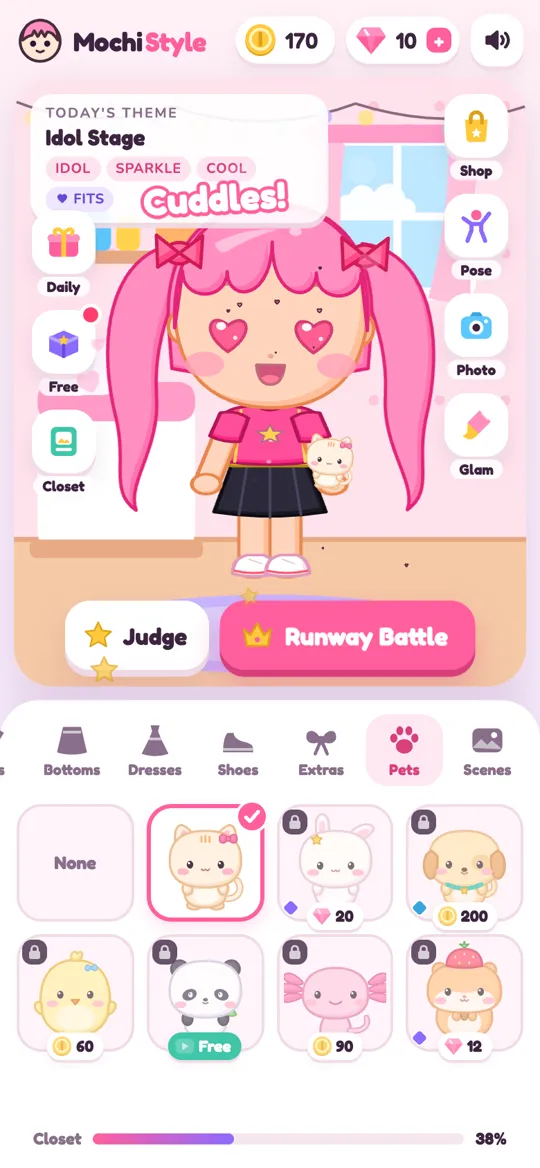
- Start with the hair. Hair is the biggest shape on a chibi doll. Twin tails or space buns in a pastel colour set the tone straight away.
- Choose one main piece. A ruffle dress, a sailor top or a bunny hoodie are all good kawaii starters.
- Recolour it into your palette. Tap a colour swatch until the main piece matches your hero colour.
- Add a puffy bottom and soft shoes. A tutu or bubble skirt with Mary Janes or bunny slippers keeps the round, sweet shape.
- Add one accessory. Cat ears, bunny ears, a big bow or star clips from the extras.
- Finish with a pet and a scene. A tiny kitty or bunny next to your doll is about as kawaii as it gets.
- Watch her face. The doll makes heart or wow eyes at things she likes and pouts at the wrong outfit, which is a fun hint while you learn.
When the look is done, you can tap Judge and let three cute judges give it stars and coins. One looks at colours, one at how well the outfit fits the theme and one at details, so it is a nice way to check your palette and accessories. If you want a challenge, try building a kawaii look against the clock in a runway battle. Our runway battle guide explains how the 60-second round works.
Common kawaii mistakes and easy fixes
- Too many colours at once. Five bright colours fight each other. Keep one hero, two partners.
- Every accessory on at the same time. Unless you are going for decora on purpose, one strong accessory looks cuter than five small ones.
- All sharp shapes. A straight skirt, pointy shoes and a plain top can feel serious. Swap one piece for something puffy or ruffled.
- Forgetting the hair. Plain dark hair with a pastel outfit can look unfinished. Try a pastel hair colour or add a bow.
- No little extra. A pet, a heart motif or a cosy scene is the detail that turns "nice outfit" into "aww".
Bringing kawaii off the screen
Once you have found looks you love on a doll, they make great starting points for drawing, colouring or planning a dress up day with friends. Take a picture of your favourite look in photo mode with stickers and frames, then try to draw it on paper or rebuild it with clothes and accessories you already have at home.
If you are a parent checking what a game like this involves, our parent checklist for dress up games covers ads, purchases and data in plain words.
FAQ
What does kawaii mean in fashion?
Kawaii is the Japanese word for cute. In fashion it means outfits that look sweet, soft and playful, usually with pastel or candy colours, round shapes, cute motifs and one fun accessory.
What colours are kawaii?
The classic kawaii colours are baby pink, lavender, sky blue, mint, butter yellow and white. Brighter candy colours also work when you pair them with softer shades so the look still feels gentle.
What are the easiest kawaii accessories to start with?
A big bow, cat ears, bunny ears or star hair clips are the quickest wins. Pick just one to begin with so it stands out instead of getting lost among other pieces.
Is kawaii the same as fairy kei or decora?
Not quite. Kawaii is the big umbrella word for cute style. Fairy kei and decora are smaller styles under that umbrella: fairy kei focuses on dreamy pastels, and decora piles on lots of colourful accessories.
Can I practise kawaii style in a dress up game?
Yes. A doll dress up game lets you try colours, hair and accessories quickly and undo anything you do not like. Mochi Style has soft themes like Unicorn Dream and Kawaii Cat Cafe that suit kawaii looks.