 Mochi Style
Idol fashion basics for beginners
Why pop star outfits look the way they do, and six simple rules you can use on a doll, in a drawing or in your own wardrobe.
In this guide
- Basic 1: pick a signature colour
- Basic 2: one statement piece, not five
- Basic 3: treat hair as part of the outfit
- Basic 4: one accessory that reads from the back row
- Basic 5: a stage look and an off-stage look
- Basic 6: finish with a pose and a concept
- How to practise idol style in Mochi Style
- Common beginner mistakes
- FAQ
Idol fashion is built on a few simple basics: a signature colour people remember you by, one statement piece instead of many, hair that works as part of the outfit, an accessory that reads from far away, and a calmer off-stage version of the same look. Learn those and you can style any doll, drawing or outfit like a pop star.
Pop idols always look "on", even in a plain hoodie. That is not luck. Idol style follows a handful of habits that make a look easy to recognise from the back of a big hall or in a tiny phone photo.
This guide covers idol fashion for beginners: the six basics behind it, why each one works, and how to practise them on a chibi doll in Mochi Style. You do not need any fashion words or special clothes. If you want ready-made stage outfits instead, our Idol Stage outfit ideas has six finished looks. This page is about the rules underneath them.
Basic 1: pick a signature colour
In many idol groups each member is linked to one colour. Fans spot their favourite instantly, and the whole group still looks planned when everyone stands together.
For your own style, choose one colour that is "yours" and let it lead most looks. It does not have to cover everything. A signature colour can live in the hair, the shoes or one main piece.
How to choose one:
- Bright colours like hot pink or sunny yellow feel energetic and playful.
- Cool colours like purple or sky blue feel calm and a little mysterious.
- Dark colours like near-black feel cool and grown-up, and make bright accents pop.
If you are unsure which colours sit well together, the pastel colour palette guide shows easy pairs.
Basic 2: one statement piece, not five
Stage outfits look busy from far away, but most of them follow a quiet rule: one piece is the star and everything else supports it. That piece might be a shiny top, glittery boots or a bold jacket.
When every item shines, the eye has nowhere to land and the look turns into noise. So:
- Choose the one piece you want people to notice first.
- Make the other pieces simpler, in calmer shades of the same colour family.
- Repeat the statement colour once somewhere else, like the shoes or a hair clip, so the look feels joined up.
Basic 3: treat hair as part of the outfit
Idols often change hair colour between concepts, because hair is one of the first things you see. On a chibi doll this matters even more. The head is drawn big, so the hair is often the largest block of colour on screen.
Think of hair as a frame. Bright hair with a dark outfit looks bold. Hair in the same colour as the outfit looks soft and dreamy. Twin tails, space buns and a high ponytail all read as playful and "stage ready" because they keep their shape when the character moves.
Basic 4: one accessory that reads from the back row
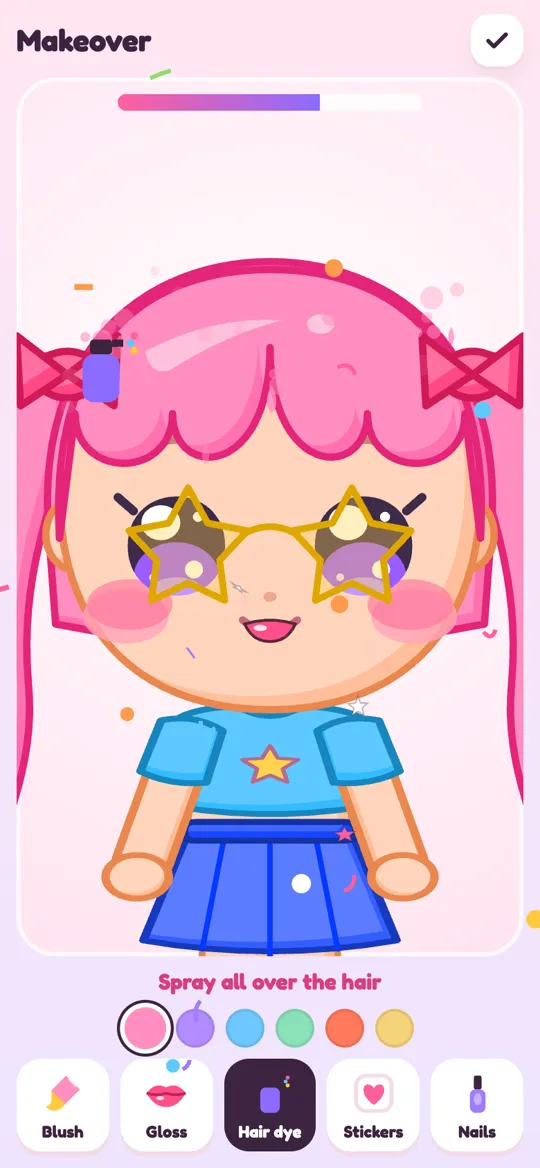
Fans in the far seats cannot see small details, so stage looks lean on accessories with a clear shape: star-shaped glasses, a hat, hair clips, even wings. A good test is to squint at the look. If you can still tell what the accessory is, it is doing its job.
Pick one strong accessory and stop. Two is fine if they sit in different places, like clips in the hair and glasses on the face. More than that starts to fight the statement piece.
Basic 5: a stage look and an off-stage look
Idol fans love "off-duty" style too, such as the comfortable outfits idols wear while travelling. These looks keep the signature colour or shape of the stage outfit but swap the sparkle for softer, simpler pieces.
Try building both versions of one idea:
- Stage: sparkly main piece, signature colour everywhere, big accessory.
- Off-stage: a hoodie or plain top in the signature colour, jeans or a simple skirt, the same hair, and one small accessory.
If both versions still feel like the same person, you have found a real style rather than just one costume.
Basic 6: finish with a pose and a concept
Idol looks are usually built around a concept: cute, cool, dreamy, sporty. The concept decides which colours, pieces and poses fit. A cute concept might use a shy or waving pose. A cool one might use hands on hips.
Say your concept in three words before you start, for example "pink, sparkly, cool". Then check each piece against those words. Anything that does not fit, swap it.
How to practise idol style in Mochi Style
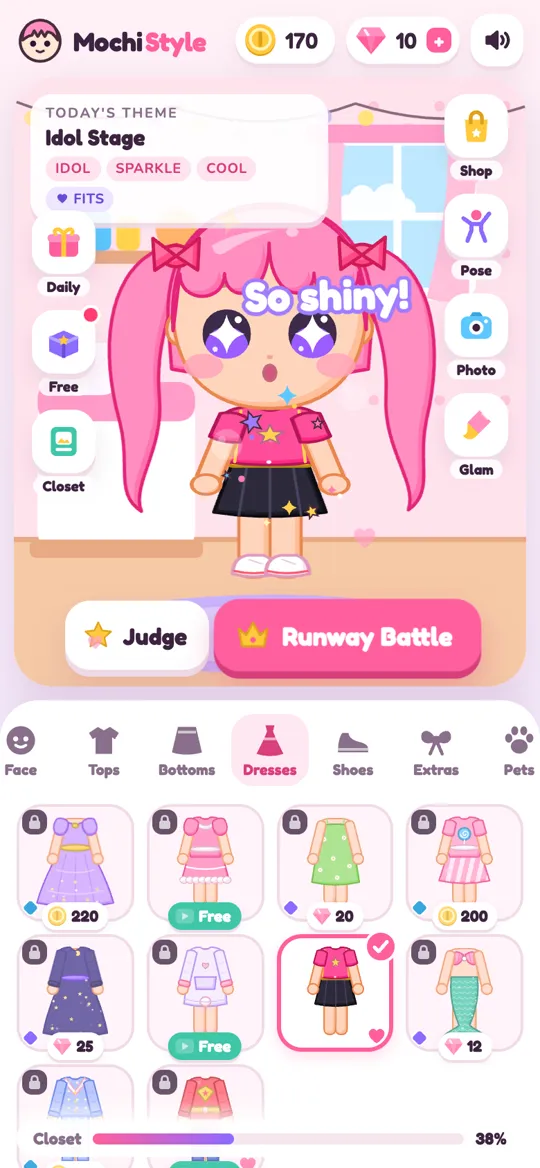
Mochi Style has an Idol Stage theme, which makes it a handy place to try these basics on a doll. Here is a routine that uses all six.
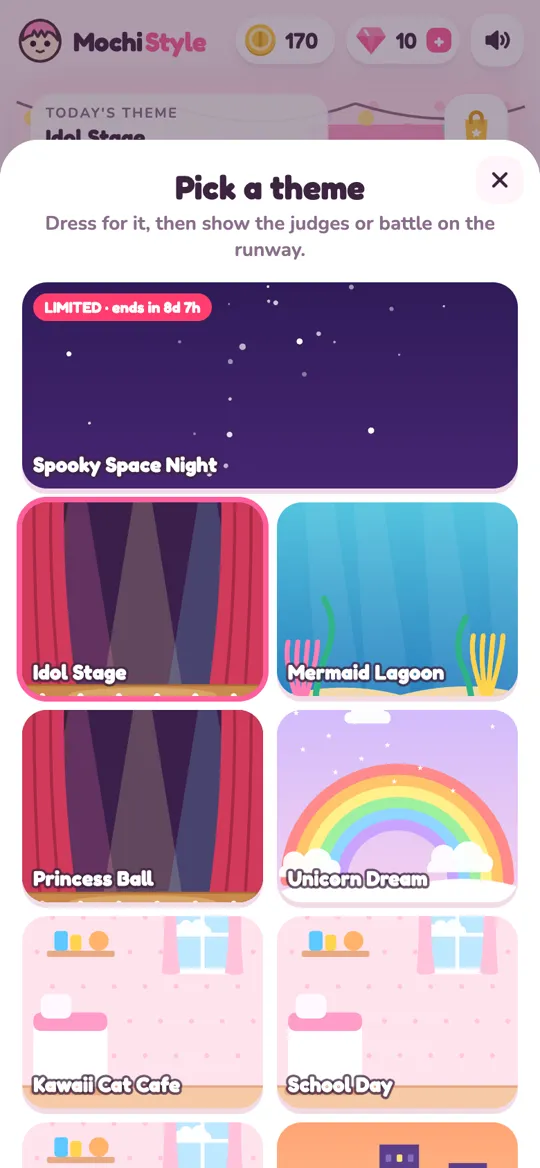
- Pick the theme. Tap the theme card and choose Idol Stage. Its style words are Idol, Sparkle and Cool, which already gives you a concept.
- Choose your signature colour. The Idol Stage colours are hot pink, near-black, sunny yellow, white and purple. Pick one to lead.
- Add one statement piece. Look for items with a small heart on their card; the heart means they fit today's theme. The Idol stage set dress and the Glitter boots are both sparkly, so pick one of them, not both.
- Recolour the hair. Choose a hairstyle with a clear shape, then pick a hair colour that frames the outfit, or try the hair dye spray in the makeover studio.
- Add one clear accessory. Star clips fit the Idol Stage theme. Glasses, a hat or wings from Extras also count as details.
- Set the scene and pose. Choose the Stage scene. In photo mode you can pick a pose such as Wave, Cheer, Shy, Hips or Twirl.
- Tap Judge. Three judges give stars and coins. Miso looks at colours, Pudding at the theme and Bean at details.
Want to know exactly what each judge counts? Our guide to how the three judges score your look breaks it down.
Common beginner mistakes
- Everything sparkles. One shiny piece is a spotlight. Three is a disco ball.
- No signature colour. A rainbow of unrelated shades looks random, not planned.
- Tiny accessories only. Small details disappear from far away. Add one bold shape.
- Forgetting the hair. On a chibi doll, the hair can decide the whole look.
- No concept. Without three guiding words, outfits drift between cute, cool and sporty.
If you are new to cute style in general, start with our simple guide to kawaii fashion. Idol style borrows many of the same colours and shapes.
FAQ
What is idol fashion?
Idol fashion is the style worn by pop idols on stage and off it. It is built around a clear concept, a signature colour, one statement piece and accessories that are easy to see from far away.
How do I find my idol signature colour?
Pick a colour you like that also suits the mood you want: bright for energetic, cool tones for calm, dark for cool and grown-up. Use it in at least one big area, such as the hair or main piece, in most of your looks.
What is the difference between a stage look and an off-stage look?
A stage look is sparkly and bold, with the signature colour everywhere and a big accessory. An off-stage look keeps the colour or shape but uses comfortable, simpler pieces like a hoodie or plain top.
Can I practise idol style in a dress up game?
Yes. In Mochi Style the Idol Stage theme gives you the style words Idol, Sparkle and Cool, a matching colour palette and a Stage scene, and three judges rate your colours, theme pieces and details.
Which Mochi Style items fit the Idol Stage theme?
Items with a small heart on their card fit the current theme. For Idol Stage that includes pieces such as the Idol stage set, the Star crop top, Glitter boots and Star clips.