 Mochi Style
What makes a good dress up game? Seven signs to look for
Some dress up apps keep kids happily creating for months. Others feel empty after a day. Here is what separates them, and how to spot it fast.
In this guide
A good dress up game gives kids real creative choice, enough clothes and colours to mix their own looks, a doll that reacts to what they pick, gentle goals like themes, and feedback that encourages instead of shaming. It should let players try things on freely, keep the screen simple, and make extras optional. You can check all of this in about ten minutes of play.
Dress up games look simple from the outside: a doll, a closet, some buttons. But anyone who has watched a child play a few of them knows they are not all the same. One app gets opened every day for weeks. Another gets a single session and is forgotten.
So what makes a good dress up game? It is rarely the number of outfits on the store page. It is how the game feels in the hands of a child who wants to make something that is theirs. Below are seven signs we look for, written from the point of view of play, not safety. For the safety side (ads, purchases, data, chat), our parent checklist for dress up games covers that in detail.
Sign 1: Real creative freedom
The heart of dress up is choice. A strong game lets the player build a look piece by piece instead of picking from finished outfits.
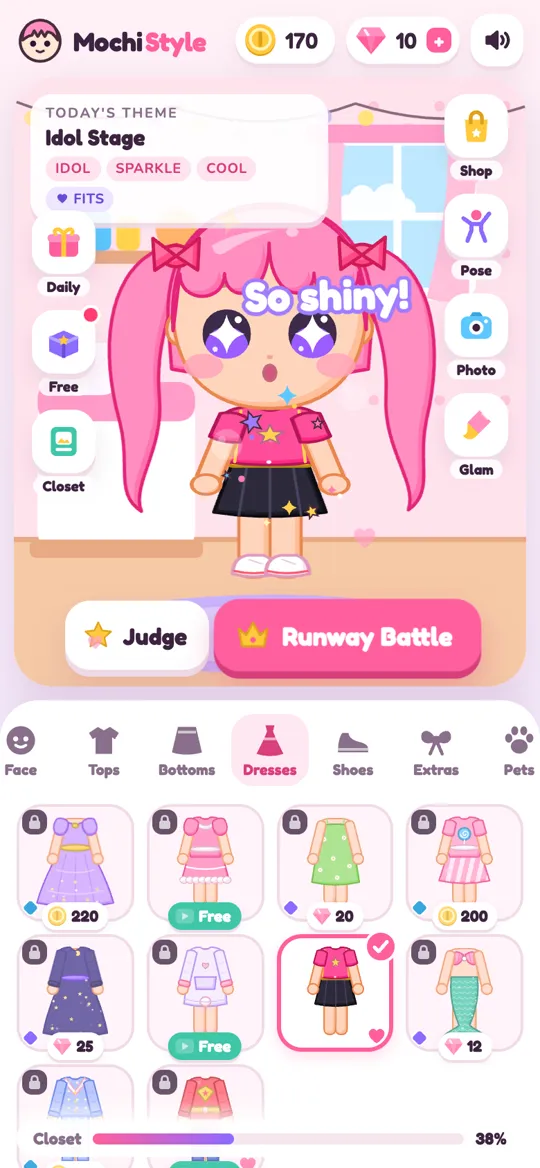
Look for separate categories for each part of the doll: hair, face, tops, bottoms, dresses, shoes and extras. The more layers you can combine, the more looks are possible, and the more a child's own taste shows through.
Colour matters just as much. If every item comes in one fixed colour, kids run out of ideas fast. If they can recolour items, the same skirt can work for a candy party, a mermaid look and a pyjama night.
In Mochi Style, almost every item can be recoloured with pastel and candy shades, and extra sparkle colours and a rainbow colour picker can be unlocked. That one feature turns a small closet into a big one.
Sign 2: A doll that reacts
A doll that just stands there is a mannequin. A doll that reacts feels like a friend you are styling.
Good games give small, quick feedback the moment you change something: a smile, a blink, a little sound. It tells the child "I noticed what you did" without a score.
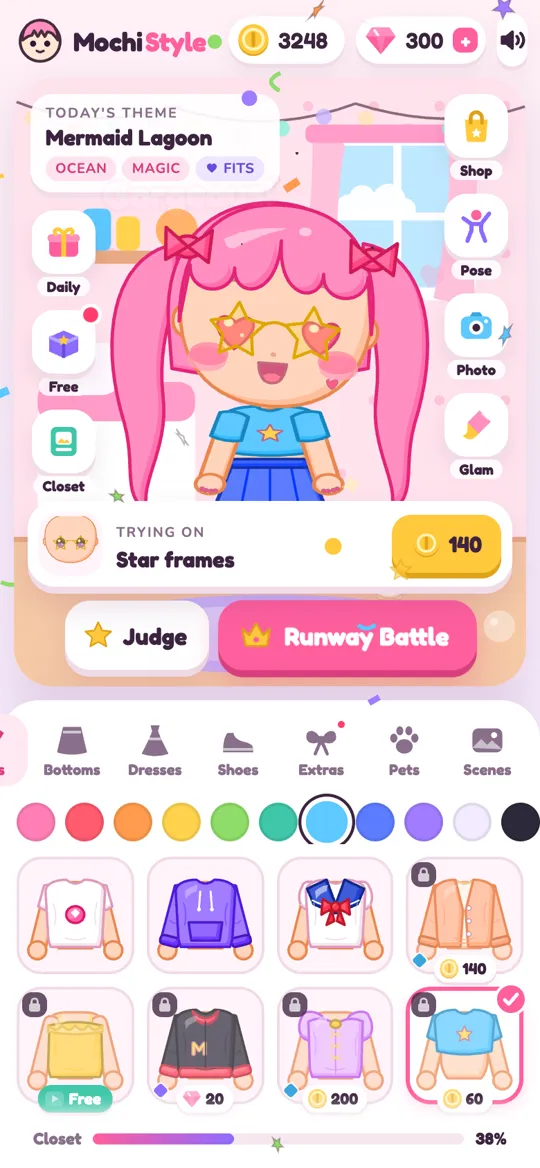
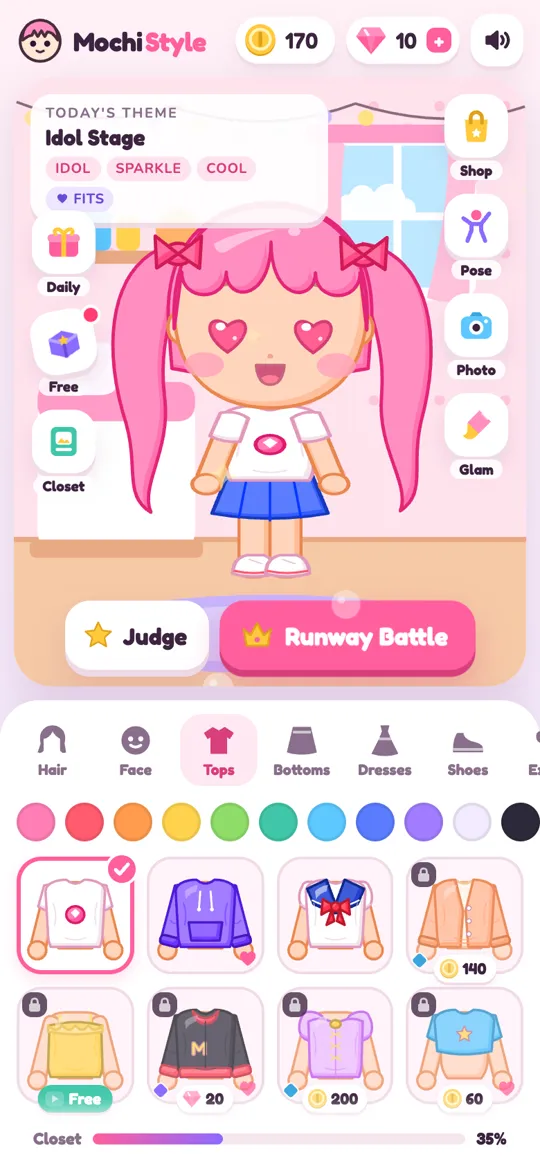
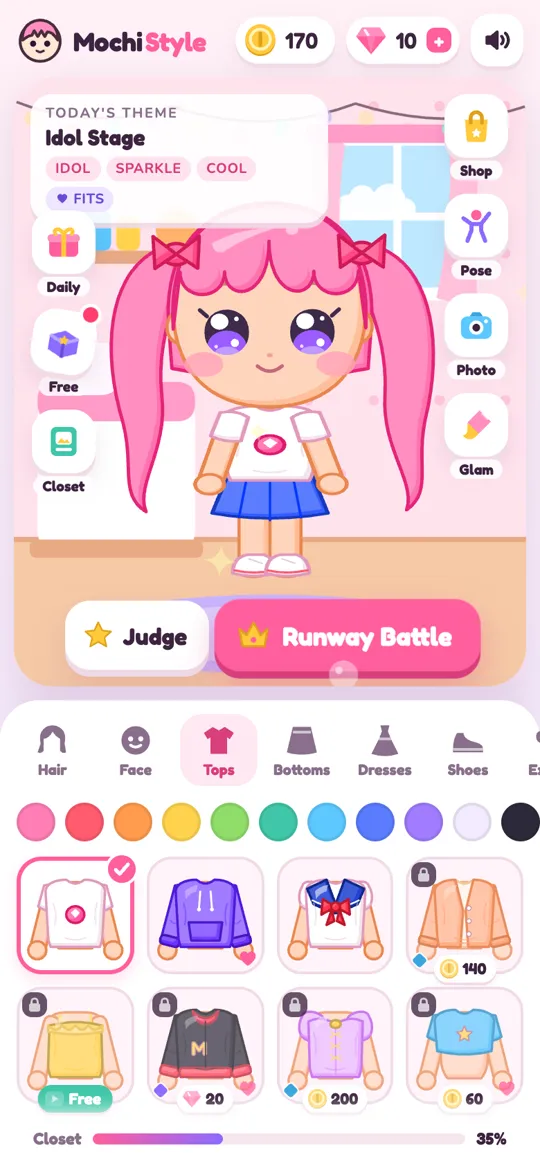
Mochi Style's doll blinks, giggles when tapped, laughs when tickled, makes wow eyes at sparkly items and pouts at the wrong outfit. Kids quickly learn to read her face as a hint, which is far more fun than a number.
Sign 3: Gentle goals, not pressure
Pure free play is lovely, but many kids also enjoy a reason to dress up. Themes give that reason. "Dress for a princess ball" is a tiny creative brief, and it makes the closet feel new each time.
The best goals are light. They suggest a direction without punishing a child who ignores it. A theme should feel like an invitation, not a test with one right answer.
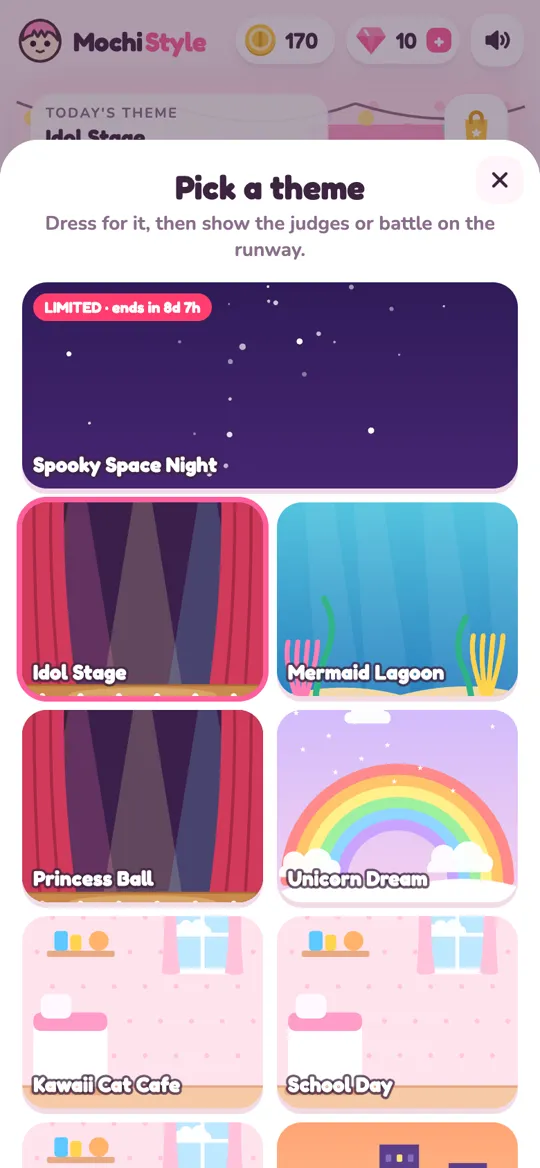
Mochi Style uses daily themes such as Candy Party, Idol Stage, Mermaid, Princess Ball and Pyjama Party. In the closet, a small heart badge marks items that fit the current theme, so younger players get a nudge without being told what to wear. Three cute judges then give stars and coins. If your child likes the cute Japanese look many themes lean on, what is kawaii fashion explains the basics in plain words.
Sign 4: Try before you commit
Kids love to experiment. A good dress up app lets them put things on, take them off and change their mind as many times as they like.
Watch out for games that hide most items behind a lock you cannot even preview. It turns creative play into window shopping.
In Mochi Style, a locked item can be tried on the doll first. A small "Trying on" card shows the item and how to unlock it. If the doll is still wearing something locked when you go to the judges, the game asks you to unlock it or take it off, so nothing happens by surprise.
Sign 5: A simple, readable screen
Young players often cannot read every label yet. Good dress up games rely on big icons, clear tabs and obvious buttons.
Signs of a well-made screen:
- Category tabs with pictures, not only words.
- One main action at a time, like "Judge" or "Battle".
- Ads that stay out of the dressing area, so taps land where the child meant.
In Mochi Style, break ads never appear before a player's third session, and after that they only come between runway battles, not while the child is choosing clothes.
Sign 6: Variety in how you play
Dressing the doll is the main event, but small side activities keep things fresh. These can be mini games, a photo mode, pets or different backgrounds.
Mochi Style mixes in a 60-second runway battle against a rival, a makeover studio with blush, lip gloss, hair dye spray, sticker tattoos and nail painting, pets to cuddle and dreamy scenes to pose in. Our runway battle guide shows how the fast mode works if you want a peek.
Sign 7: Extras that stay optional
Most free games make money somehow. In a good one, the fun does not depend on spending. Coins should come from playing, surprise boxes should show their odds, and paid items should be a bonus.
Mochi Style is free to play with ads and optional purchases. Coins come from play, the judges and daily gifts, and the free mystery outfit box always shows its odds.
The 10-minute test for any dress up app
You do not need to read reviews for an hour. Sit with your child and try this:
- Open the closet. Count how many separate categories there are, and check if items can be recoloured.
- Change one item. Does the doll react, or does nothing happen?
- Pick a theme or goal. Is there one, and does it feel like an invitation or a test?
- Tap a locked item. Can you try it on first, or is it a wall?
- Play for five minutes. Note when ads appear and whether any land in the middle of dressing.
- Look for one side activity. Photo mode, a mini game, pets or scenes.
- Ask your child. "Which part did you like best?" Their answer tells you more than any store page.
Putting it together
A good dress up game is really a good creative toy. It gives choice, reacts warmly, offers light goals, lets kids experiment freely and keeps everything else out of the way. If an app hits most of these seven signs, chances are it will still get opened next month.
FAQ
What is the most important feature in a dress up game?
Creative freedom. A game that lets kids mix separate pieces and recolour them gives far more possible looks than one with a few fixed outfits, so it stays fun for much longer.
Are themes or free play better for kids?
Both work. Free play suits kids who already have ideas, while themes give a gentle prompt to kids who like a small goal. Games that offer both, with themes as an option rather than a rule, tend to suit the most players.
How can I tell if a dress up game pushes purchases?
Try it for a few minutes. Check whether you can preview locked items, whether coins come from normal play, and whether surprise boxes show their odds. If the fun stops without paying, that is a warning sign.
Does Mochi Style let kids try on locked items?
Yes. A locked item can be put on the doll to see how it looks, with a small card showing how to unlock it. Before judging, the game asks you to unlock it or take it off.
Is Mochi Style available yet?
Mochi Style is a free dress up game for Android that is coming soon to Google Play. This site will show the Google Play button as soon as it is live.